A Fresh Take On Rotten Dealings
Thanks for tuning in to our April community update! This time around we’ll be diving into the design discussion around one of the core aspects of the moment-to-moment gameplay in Conqueror: Reign of Madness:
The Kobold Squad System
Where Does An Idea Come From? – Kobold(Advisor)
To establish a compelling design argument, we have to first address the design philosophy behind the team.
Our extremely talented team of designers have built a design formula that supports both our size as an indie team and the scope of our work.
They have also done the excellent job of visualizing that design strategy for you here.
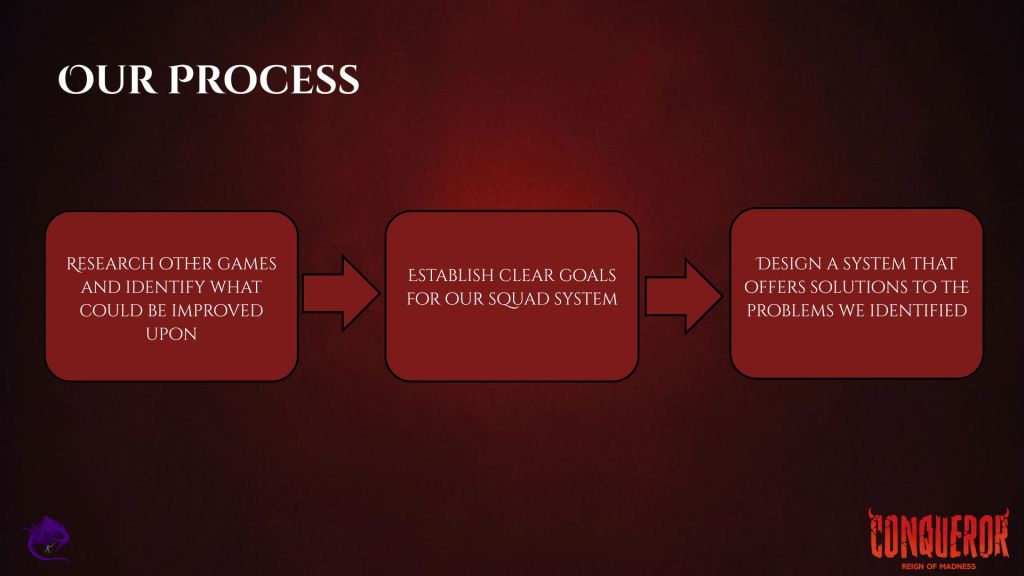
During development, our first task was to research similar titles with squad or follower systems.
After collating internal and external feedback on these existing systems, we narrowed down the most common problems and began to devise solutions for each one.
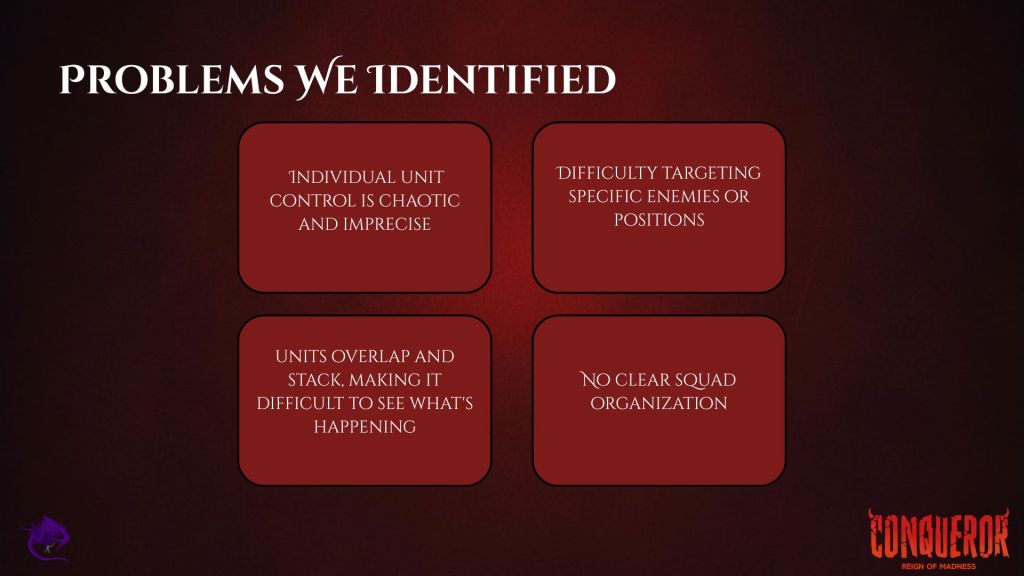
Some of the most consistent issues we saw were:
- Controlling individual units felt imprecise, leading to frustration.
- A weak targeting system, leading to issues trying to lock down specific enemies or locations.
- A lack of clear division, which made larger combat encounters hard to track.
- Issues around quickly organizing your followers and summons to perform specific actions.
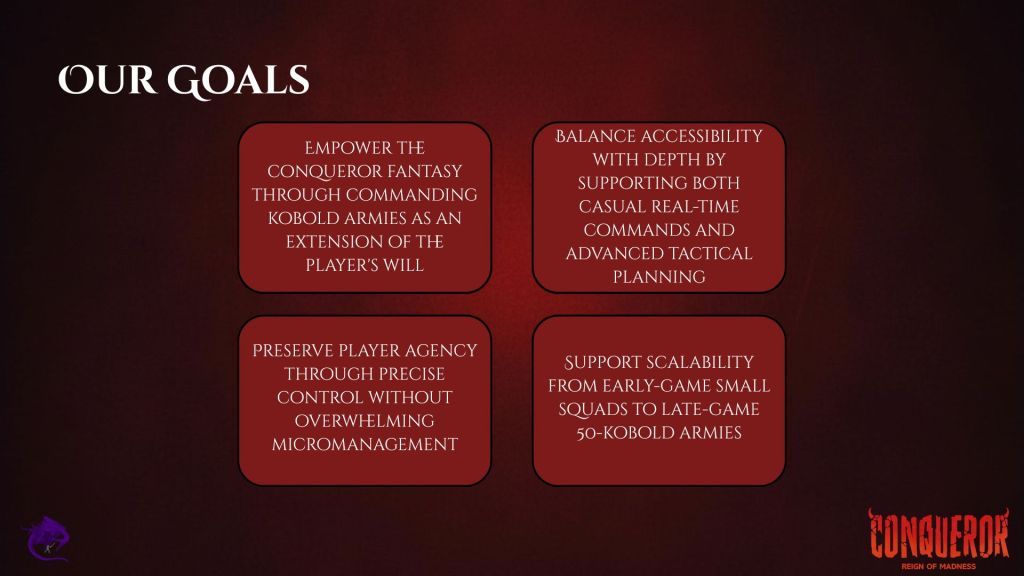
Upon identifying these problems, we wanted to make sure our Kobold army was an extension of the player.
This means making sure the player can engage any situation with real time commands to help develop a more strategic approach to all encounters.
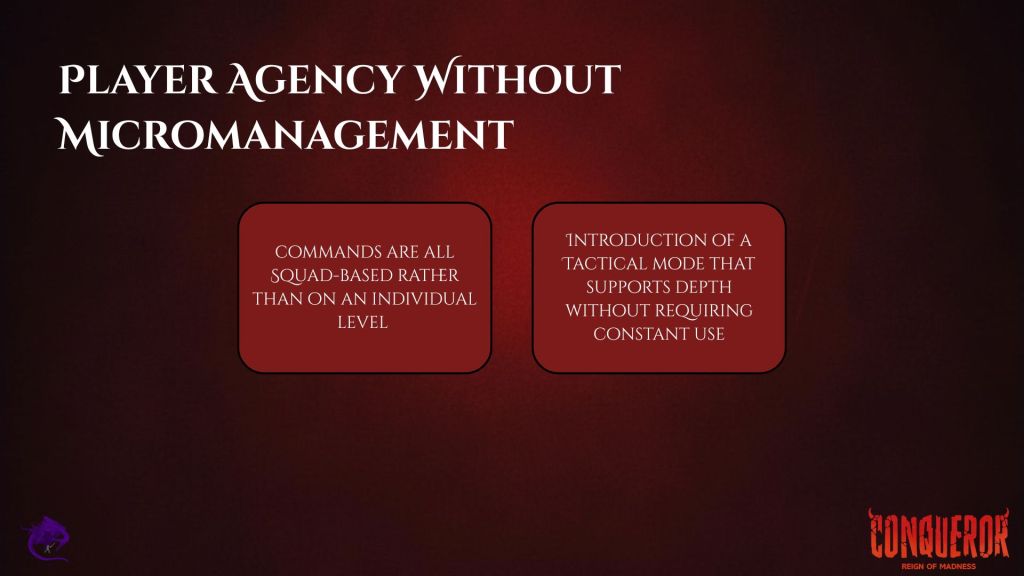
Additionally, we wanted to make sure the player has agency without feeling that they need to constantly stop the action to get their squad to perform a specific task.
Within the system, we had to make sure that early game management is just as intuitive and engaging as the late game army the player will control.
Evil Comes In Waves
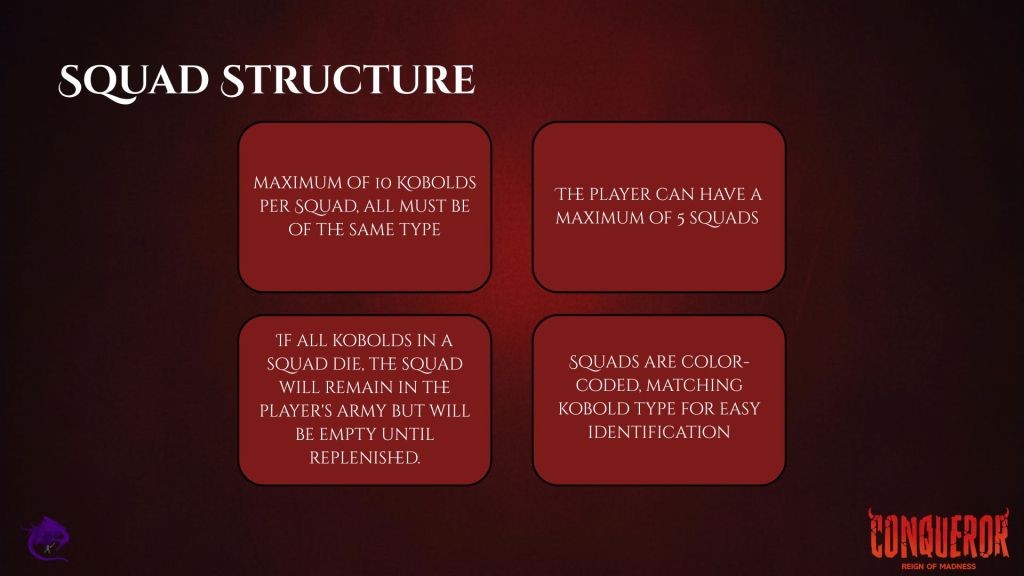
Originally, we weren’t going to feature commands or squads, however some of our newer team members expressed that easier management would lead to a more enjoyable experience.
The squads, which all require the same type of Kobold, help make this easier for the player to strategize.
Limiting each squad to one type of Kobold also helps to avoid any confusion on the battlefield when trying to execute specific commands, as the player will be able to identify what each type of kobold squad is used for.
We also revisited what each Kobold type should represent, and after some internal discussion, we decided to stick with the classic formula so each player can quickly learn what each Kobold type does, and how to maximize their effectiveness.
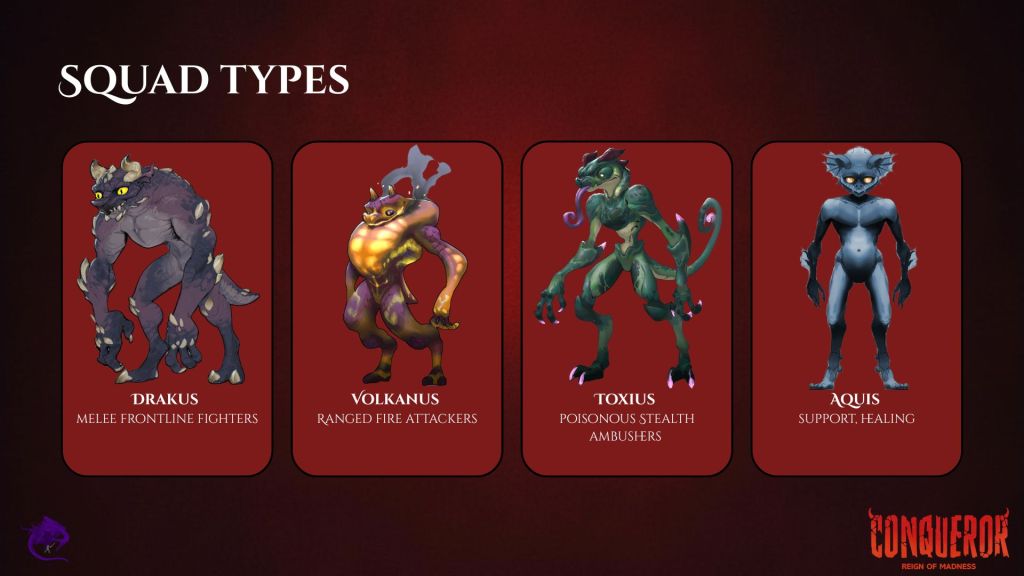
Some of these strategies include directing your Kobold army into a more aggressive approach, attacking anything on sight, or alternatively, leaning into a more defensive style leading to them only reacting when attacked first.
To help with these commands, and numerous others, we plan to implement a tactical view.
This view will slow time, granting the player a bit of breathing room (but not too much) allowing you to figure out how to adapt before or during a fight.
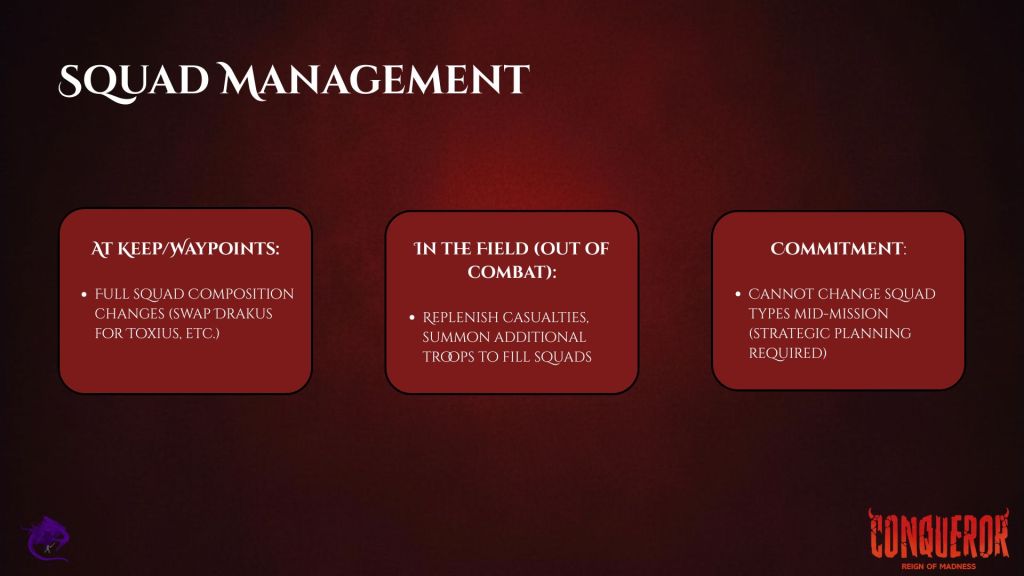
While kobolds and squads may be wiped out due to the numerous challenges of the world, we wanted to limit the locations for modifying the system.
While out of combat and at the keep, the player can change squad compositions, but in the battlefield, the player will only be allowed to replenish troops into their existing squad assignments.
This system allows the player to have a moment of reflection on their current plan and avoids the frustration of feeling locked into the same strategy, while also allowing the player the freedom of trying the same plan all over again.
(Malicious) Compliance
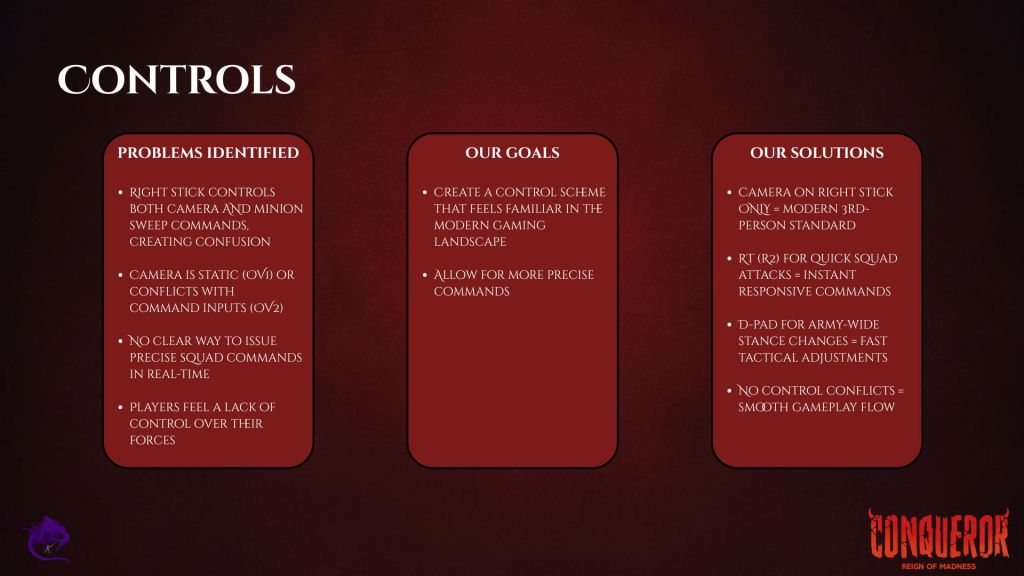
With Conqueror, the aim was to make sure the game is completely playable with a controller, so we ensured each command (along with other features we will discuss at a later time) was designed with other devices in mind.
The real time and active pause commands will use different button presses to activate, along with intuitive systems and UI to ensure the player is always aware of what commands they have access to.
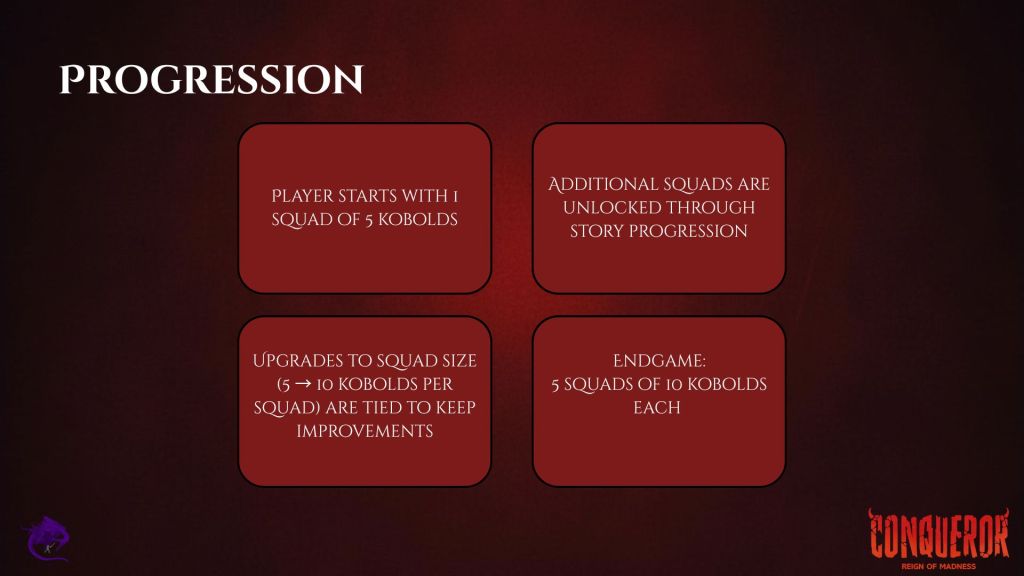
As the player advances through the story of Conqueror, the squad system should adequately progress alongside the path of destruction.
In an effort to maintain a manageable number of Kobolds at the player’s disposal, the design team settled on a maximum capacity of 50 controllable troops.
At specific points in narrative and gameplay progression, the player will have the opportunity to directly increase the maximum capacity of Kobolds they are allowed to summon and control.
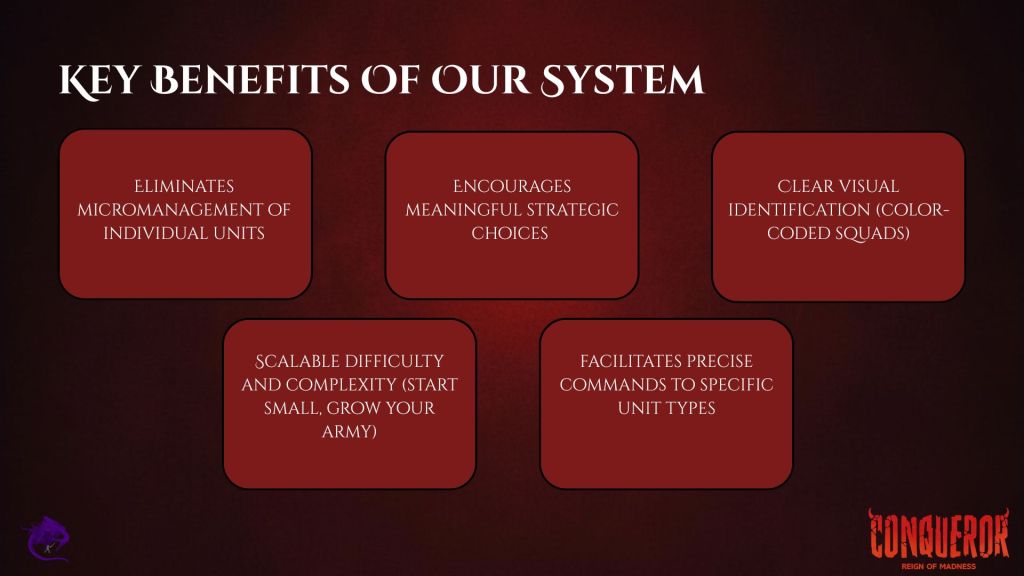
To wrap up, our design department spent time initially researching various titles across the industry with successful tactical combat systems that features controllable individual troops, groups of summonable creatures, and active pause combat screens.
Based on the feedback collected, the team applied the same criticisms of those existing titles to our own internal plans, and used that information to refine our Kobold Squad System into a user-friendly experience.
We personally feel that this approach has allowed the team to explore additional paths for current and future iterations of the Kobold’s place in Conqueror’s gameplay loop, as well as their overall interaction with the world.
With that recap, we want to thank everyone for tuning in to this community update! We’re all extremely excited to share more about Conqueror: Reign of Madness and its design choices!
See you next month!
Jack

Leave a comment